Pre-Seed Funding UK: What It Is, How Much to Raise, and How to Find Investors in 2026



- Understand pre-seed funding. Pre-seed funding is the earliest stage of external startup investment. It helps founders build a product, test demand and reach the milestones needed for a future seed round. In the UK, pre-seed capital commonly comes from founders, angel investors, accelerators and specialist early-stage funds.
- Raise based on milestones, not a headline number. There is no official UK benchmark for how much a startup should raise at pre-seed. Most founders work backwards from the milestones they need to achieve and the runway required to reach them. The right amount depends on your business model, sector and growth plans.
- Focus on investor readiness. UK founders can access capital through angel investors, syndicates, pre-seed VC funds, accelerators, grants and government-backed schemes. Programmes such as SEIS and the British Business Bank Start Up Loan can help make early-stage businesses more attractive to investors and provide additional funding options.
Pre-seed funding is the earliest stage of external startup investment. It helps founders turn an idea into a business that is ready for growth. In the UK, this capital often comes from founders, friends and family, angel investors, accelerators and specialist early-stage funds. The funding is typically used to build a minimum viable product (MVP), hire key team members, test market demand and reach the milestones needed for a future seed round.
Pre-seed funding rounds are generally smaller than seed rounds and are often structured using instruments such as Advance Subscription Agreements (ASAs), SAFEs or convertible loan notes. Because companies at this stage usually have limited revenue or operating history, investors focus heavily on the founding team, market opportunity and early signs of traction.
Many UK founders aim to raise enough capital to achieve their next major milestones while maintaining a manageable level of dilution and sufficient runway before their next fundraising round.
What is pre‑seed funding?
Pre‑seed funding is the first formal investment a startup raises once the founders’ own savings have been exhausted. It exists to turn a promising idea into something tangible. Because the company often has no revenue or product yet, investors bet on the team and the potential market. Below, we break down what pre‑seed funding means, how it differs from seed funding and when UK founders are ready to raise.
Pre‑seed funding meaning
Pre‑seed funding (or pre‑seed financing) is early‑stage capital raised before a priced seed round. Money can come from founders themselves, friends and family, angel investors, pre‑seed VC funds, accelerators or early‑stage government loans. It typically funds:
- Product design and prototyping
- Hiring the first engineer or salesperson
- Incorporation costs, IP registration and legal paperwork
- Initial market research and marketing tests
Data from Idea London shows that UK pre‑seed rounds averaged about £580k in 2024 across roughly 1,450 deals. These deals remain small relative to later rounds because valuations are still based on potential rather than performance. A pre-seed round is usually structured as a convertible agreement (such as an ASA or SAFE) rather than a priced equity round. These instruments defer valuation until a later seed round, making it faster and cheaper to close.
Pre‑seed vs seed: what’s the difference?
It’s easy to confuse pre seed vs seed funding because both occur early. The difference is scope and maturity:
There is no single official UK benchmark for pre-seed rounds because pre-seed transactions are often smaller, privately negotiated and less consistently reported than seed-stage investments. However, industry data suggests that many UK pre-seed funding rounds fall between £150,000 and £750,000, with valuations commonly sitting in the low single-digit millions.
By comparison, the British Business Bank reports that the average seed-stage pre-money valuation was £5.6 million in 2024, while the median seed investment size was £560,000.
How much should you raise at pre-seed in the UK?
Your pre-seed funding round size should be driven by what you need to achieve before your next raise. The goal is to secure enough capital to reach meaningful milestones without giving away more equity than necessary.
Unlike seed-stage investment, there is no official UK benchmark for pre-seed round sizes or valuations. Pre-seed deals are often privately negotiated and are not reported as consistently as later-stage investments. As a result, founders should be cautious about relying on industry averages when planning a raise.
What matters most is whether the funding will allow you to achieve the milestones that make your business attractive to future investors. These milestones might include launching an MVP, securing pilot customers, reaching product-market fit, building a core team or generating early revenue.
How to work out your funding target
Rather than starting with a headline number, work backwards from your objectives.
Ask yourself:
- What milestones do we need to achieve before a seed round?
- What resources are required to reach those milestones?
- How much will salaries, product development, marketing and operational costs total during that period?
- What contingency buffer do we need if progress takes longer than expected?
A founder building a software product may need funding for engineering hires and product development. A deep-tech company may require additional capital for research, testing and regulatory approvals. The amount you raise should reflect the realities of your business rather than a generic benchmark.
Understanding valuation and dilution
Valuation and dilution are closely linked. The more capital you raise at an early stage, the more ownership you may need to give up.
There is no official UK benchmark for pre-seed valuations. Valuation depends on a range of factors, including:
- The experience of the founding team
- Market size and commercial opportunity
- Intellectual property and technology
- Evidence of customer demand
- Competitive landscape
- Investor appetite
Because pre-seed companies often have little or no revenue, investors tend to focus more on the quality of the team, the strength of the opportunity and early signs of traction than on historical financial performance.
As a point of comparison, the British Business Bank reports that the median UK seed-stage investment was approximately £560,000 in 2024, with an average seed-stage pre-money valuation of £5.6 million. Pre-seed rounds generally occur before this stage and are typically smaller, though the exact amount varies significantly from company to company.
The right pre-seed raise is not the largest amount you can secure. It is the amount that gives you enough runway to reach your next meaningful milestone while preserving flexibility for future funding rounds.
How to work out your number (the runway method)
Instead of asking investors “how much should we raise,” work backwards from your runway. The pre‑seed founders should budget 18–24 months of runway. Here’s a step‑by‑step method:
- Calculate your monthly burn. Add up fixed costs (salaries, rent, software) and variable costs (marketing, contractors). For example, a lean pre‑seed startup might burn £20k/month.
- Choose your target runway. 18 months: minimum survival, enough time to build an MVP and attract early customers. 24 months: safer, gives you a buffer to hit key milestones and avoid fundraising under pressure. Multiply your burn by the number of months.
- Add a buffer. Add 20% to cover unexpected delays or costs.
- Anchor to milestones. Investors fund outcomes, not time. Tie your raise to milestones: launching your MVP, onboarding your first 500 users, reaching £10k MRR or securing pilot contracts.
This methodology ensures you raise enough to hit your next milestones without giving away unnecessary equity.
Pre‑seed valuation and how much equity to give away
Valuation at pre‑seed is often negotiated rather than calculated. Typical dilution of 10–15% for pre‑seed rounds. To estimate your valuation, divide the amount you plan to raise by the percentage of equity you’re willing to sell.
This simple formula helps you negotiate. Keep in mind that valuations vary widely by sector; hot markets like fintech or AI attract higher valuations, while deep‑tech may start lower. SEIS/EIS tax incentives (described later) can also justify higher valuations because investors receive 50% income tax relief. Be prepared to back up your numbers with realistic financial projections and a clear growth plan.
How to find pre‑seed investors in the UK
Money doesn’t magically appear; you have to seek it out. UK founders have several sources for pre‑seed funding, each with their own quirks. Below are the main categories and examples.
Angel investors and angel syndicates
Angels are high‑net‑worth individuals who invest their own money. They typically write cheques of £10k–£100k and bring experience and networks. Many angels invest through syndicates that pool funds and share due diligence. UK examples include the S100 Angel Investment Club (linked via SETsquared), Cambridge Angels and Minerva Business Angels. To attract angels:
- Network proactively. Warm introductions from founders, advisors or accelerator alumni carry more weight than cold emails.
- Be SEIS‑ready. SEIS offers investors up to 50% income tax relief on investments of up to £200,000 per tax year, and lets a company raise up to £250,000 under the scheme. Presenting HMRC Advance Assurance reassures angels that their investment is likely SEIS‑eligible.
- Prepare a clear cap table and valuation. Angels may negotiate convertible terms or take ordinary shares. Use a cap‑table management tool (Undo Capital’s cap table product) to track dilution.
Pre‑seed VC funds and micro‑funds
Some venture capital firms specialise in pre seed funding and pre seed investment. They invest slightly larger amounts (from £100k to £500k) and often lead rounds. Examples include:
- Octopus Ventures: invests about £100k at pre‑seed and participates from £1 million at seed through Series B. Focuses on AI, health, fintech and climate.
- SFC Capital: runs the UK’s leading SEIS fund, typically investing £100k–£300k for 10–20% equity. Look for SEIS‑qualifying businesses.
- Parkwalk Advisors: invests in university spin‑outs and deep‑tech startups. Their EIS funds back companies emerging from institutions such as Oxford and Cambridge.
- Seedcamp: one of Europe’s first seed funds- invests pre‑seed to seed and has backed more than 550 companies.
- Sustainable Ventures: invests in climate‑tech startups under SEIS/EIS schemes.
Accelerators, grants and the British Business Bank Start Up Loan
Accelerators provide structured programmes that combine investment, mentorship and resources. Top UK programmes include:
- Baltic Ventures: a Liverpool‑based accelerator offering a 5‑month programme and £30k investment via an Advance Subscription Agreement through its angel syndicate.
- Bethnal Green Ventures (BGV): Europe’s leading tech‑for‑good accelerator; invests roughly £60k for 7% equity and provides a 12‑week programme plus a strong mentor network.
- Techstars London Accelerator: runs a 3‑month programme that connects startups to mentors, investors and a global network.
- NatWest Accelerator: offers free support, physical hubs and an app to help entrepreneurs explore funding options, craft investment stories and develop strategic skills.
- SETsquared: a university‑linked network providing incubation, flexible workspace and connections to angel groups like the S100 Angel Investment Club.
These programmes often include follow‑on funding opportunities and can dramatically expand your network. Each has its own application process; plan ahead because cohort intake dates may not align with your fundraising timeline.
Government programmes also support early‑stage founders:
- British Business Bank Start Up Loan. This scheme is a personal loan, not equity, but it can bridge your earliest funding gap. UK‑based founders aged 18+ can apply for up to £25,000 each (maximum £100,000 per business). The loan is unsecured and carries a fixed interest rate of 6% per year. You repay it over 1-5 years and receive 12 months of free mentoring. Applicants must provide a business plan, cash‑flow forecast, personal budget and three months of bank statements. The loan suits founders who want to retain full equity while proving their idea.
- Innovate UK Smart Grants. Although not strictly pre‑seed, Innovate UK runs recurring competitions that award £25k–£2 million for game‑changing R&D. Grants are non‑dilutive but highly competitive and require a solid technology proposition.
Use grants and loans carefully; they can complement a pre‑seed round, but don’t replace the need for investor relationships. Many founders combine a small Start Up Loan with angel or accelerator money to avoid unnecessary dilution.
How to raise pre‑seed funding: a step‑by‑step process
Raising a pre‑seed round can feel daunting. Following a structured process ensures you avoid common pitfalls and present a professional, investable story.
1. Get your numbers and cap table investor‑ready
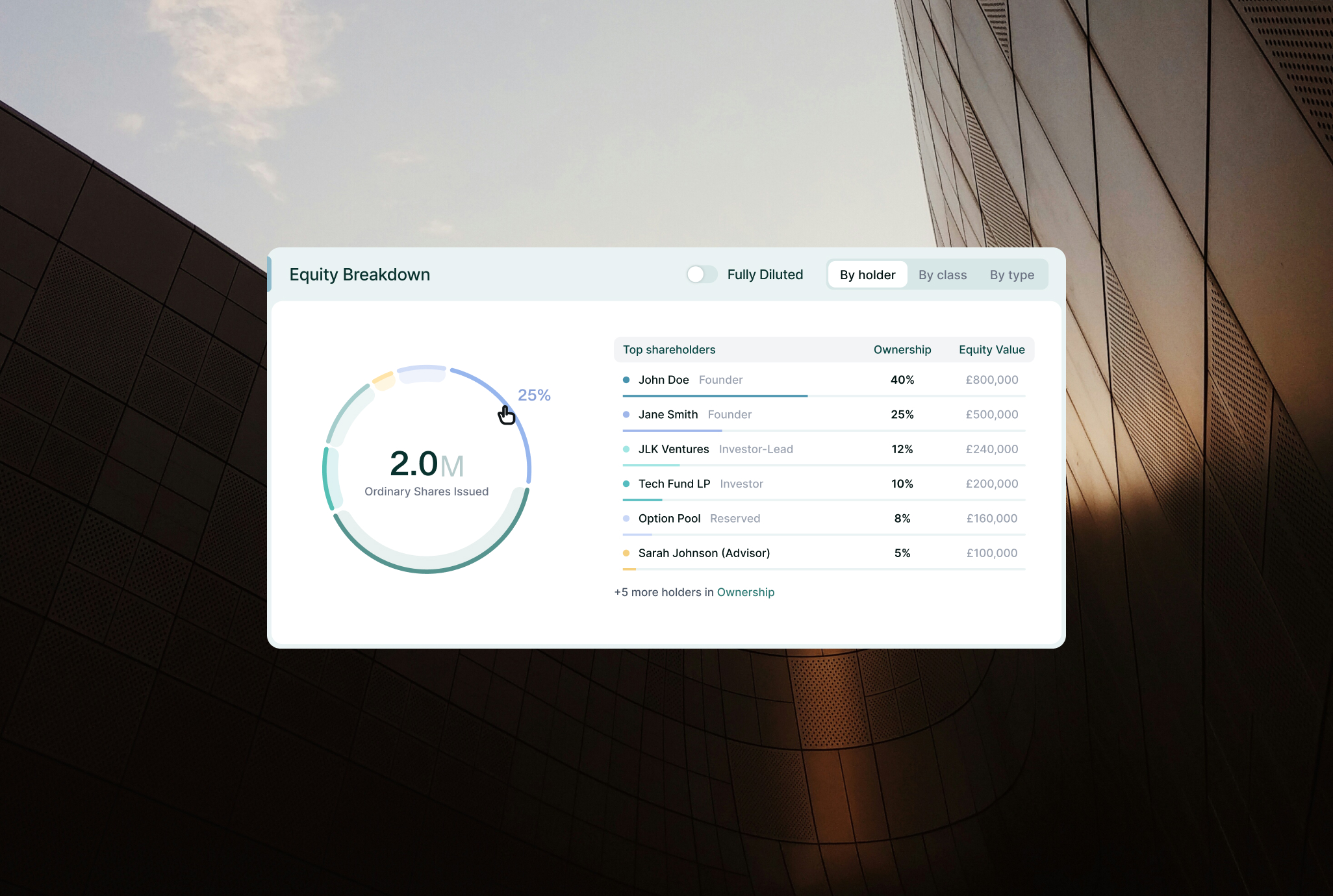
Investors want to see that you understand your financials. Build a simple model showing burn rate, runway, projected revenue, and cash-out dates. Tools like Undo Capital’s cap table help you model dilution across different raise scenarios and share the results with investors. Keep your share register up to date; messy cap tables and unclear founder arrangements are a major red flag.
2. Choose your instrument: ASA, SAFE or convertible loan note
At pre‑seed, most UK rounds use convertible instruments rather than priced equity.
- Advance Subscription Agreement (ASA): A UK‑specific instrument that is compatible with SEIS/EIS. "It is not a debt instrument, carries no interest, and must have a longstop conversion date of no more than six months with no right to a refund, conditions HMRC requires for SEIS/EIS compatibility. Because ASAs must convert quickly, investors get shares sooner, which can increase SEIS/EIS compliance.
- SAFE (Simple Agreement for Future Equity): A US‑origin instrument now used globally. It is founder‑friendly, with no interest, maturity date or repayment. However, standard SAFEs are not automatically SEIS/EIS‑compatible, so many UK founders adopt modified SAFEs or choose ASAs instead.
- Convertible Loan Note (CLN): Functions like debt. Investors lend money that converts into equity at a future round but may accrue interest and include a maturity date. CLNs can bridge to seed rounds but may not qualify for SEIS. They tend to be more complex legally and can sit on your balance sheet as debt.
When choosing an instrument, consider your timeline to seed, SEIS/EIS eligibility and investor preferences. Many UK investors will insist on SEIS‑compatible ASAs or equity to secure their tax relief.
3. Secure SEIS/EIS Advance Assurance before you pitch
Advance Assurance is HMRC’s confirmation that an investment is likely to qualify for SEIS/EIS, giving investors confidence. The official guidance states that you should supply HMRC with information about the amount you plan to raise, your business plan and financial forecasts, latest accounts, company constitution and shareholder register. If you already have potential investors, you must list their details. HMRC stresses that advance assurance is not a guarantee, but investors often insist on it before committing.
Start preparing your application early, as HMRC reviews can take several weeks. Undo Capital helps UK founders prepare, review and submit SEIS/EIS Advance Assurance applications with confidence, reducing manual work and avoiding common mistakes.
4. Build your investor pipeline
Fundraising is a numbers game. Map out a list of potential angels, syndicates, micro‑funds and accelerators that invest in your sector. Use networks like LinkedIn, AngelList, OpenVC and relevant Slack communities. Pitching 30–50 investors is normal; expect only a handful to engage meaningfully. Keep detailed notes on each conversation and schedule follow‑ups.
Founder tip: Don’t rely on cold outreach alone. The highest-quality investor introductions often come through other founders, existing investors, accelerators and advisors. Ask founders in your network for warm introductions to investors they’ve previously worked with, referrals from trusted founders are far more likely to result in a meeting than a cold email or LinkedIn message.
5. Prepare your pitch and data room
Investors want to see a concise pitch deck (10-12 slides) covering problem, solution, market, traction, business model, go‑to‑market, team and financing plan. Avoid hyperbole; focus on evidence and clear next steps. Build a data room with your financial model, cap table, legal documents (articles of association, shareholders’ agreement), IP assignments and previous financing documents. Sprintlaw warns that poorly documented founder arrangements, missing IP assignments and sloppy corporate filings are common mistakes. Avoid them by preparing your paperwork early.
6. Negotiate terms and close cleanly
When you receive a term sheet, review it carefully. Key terms include valuation, amount raised, discount or valuation cap (for convertible instruments), investor consent rights, board involvement and founder vesting. Don’t rush to accept; negotiate terms you’re uncomfortable with and seek legal advice if necessary. Document the investment properly, issue share certificates, and update Companies House filings.
Run a clean pre‑seed raise with Undo Capital
Undo Capital helps UK founders run frictionless funding rounds. Its products include a cap table tool for modelling dilution, a deal room for secure document sharing, SEIS/EIS Advance Assurance support and a share certificate generator. Use Undo to prepare your numbers, issue instruments like ASAs, manage your investor data room and keep your corporate records tidy.
FAQs
What is pre‑seed funding?

Pre‑seed funding is the earliest formal stage of startup investment. It is usually raised before a seed round to turn an idea into a minimum viable product and test market demand. In the UK, it typically covers product development, a first hire or two and enough runway to hit the milestones that make a seed round possible. It usually comes from founders, angel investors, pre‑seed VC funds and accelerators.
How much pre‑seed funding should a UK startup raise in 2026?
Most UK pre‑seed rounds in 2026 fall between roughly £150k and £750k. Work backwards: calculate the cost of reaching your next milestones, add 12–18 months of runway and a 20% buffer. Avoid over‑raising, as it forces you to give away more equity than necessary at your lowest valuation.
What is the difference between pre‑seed and seed funding?
Pre‑seed funding comes first and is usually about proving the idea is viable. Seed funding comes next, is typically larger, and median UK seed rounds were £0.56 million in 2024, and is used to scale a product that already shows traction. Pre‑seed rounds are smaller, rely more on angels and micro‑funds and are priced on potential rather than performance.
Where do UK founders find pre‑seed investors?
UK founders typically find pre‑seed investors through angel networks, angel syndicates, early‑stage VC funds that write pre‑seed cheques, accelerator programmes and warm introductions from other founders. Government‑backed routes such as the British Business Bank Start Up Loan (unsecured personal loan up to £25k per founder at 7.5% interest) can also bridge the earliest funding gap. Being SEIS‑eligible with advance assurance makes you considerably more attractive to UK angels.
Disclosure Notice: This communication is issued by Undo Capital Limited (“Undo Capital”) and is provided strictly for informational purposes only. It contains general information and should not be relied upon as accounting, business, financial, investment, legal, tax, or other professional advice. Undo Capital is not regulated by the Financial Conduct Authority (FCA) and does not provide investment, financial, or tax advice. Our services are designed to assist startups and businesses with company formation, legal agreements, and funding-related documentation. Nothing in this communication constitutes, or should be construed as, a recommendation, offer, or solicitation to purchase or sell any security or financial instrument.
Participation in startups and early-stage enterprises involves significant risk. Such investments may be illiquid, may not generate dividends, may be subject to dilution, and may result in the total loss of invested capital. Any decisions or actions that may affect your business or personal interests should be taken only after seeking advice from suitably qualified professional advisors, and should form part of a balanced and diversified portfolio. This communication may contain links to third-party websites. The inclusion of such links does not imply endorsement, approval, investigation, or verification by Undo Capital. We accept no responsibility or liability for the content, accuracy, or use of information contained on any third-party websites.
Latest articles

SEIS and EIS Tax Relief Calculator
Founders Agreement Template UK: What Every Co-Founder Should Include